


MONOS
The year concludes with MONOS. Artist Museums: Shrines and Reflections, an exhibition in the rectory wing of the Roger Raveel Museum that examines the architecture of the monographic museum. Using interesting examples from Belgium and its neighbouring countries, it shows the particular and the typical of their buildings and their histories.
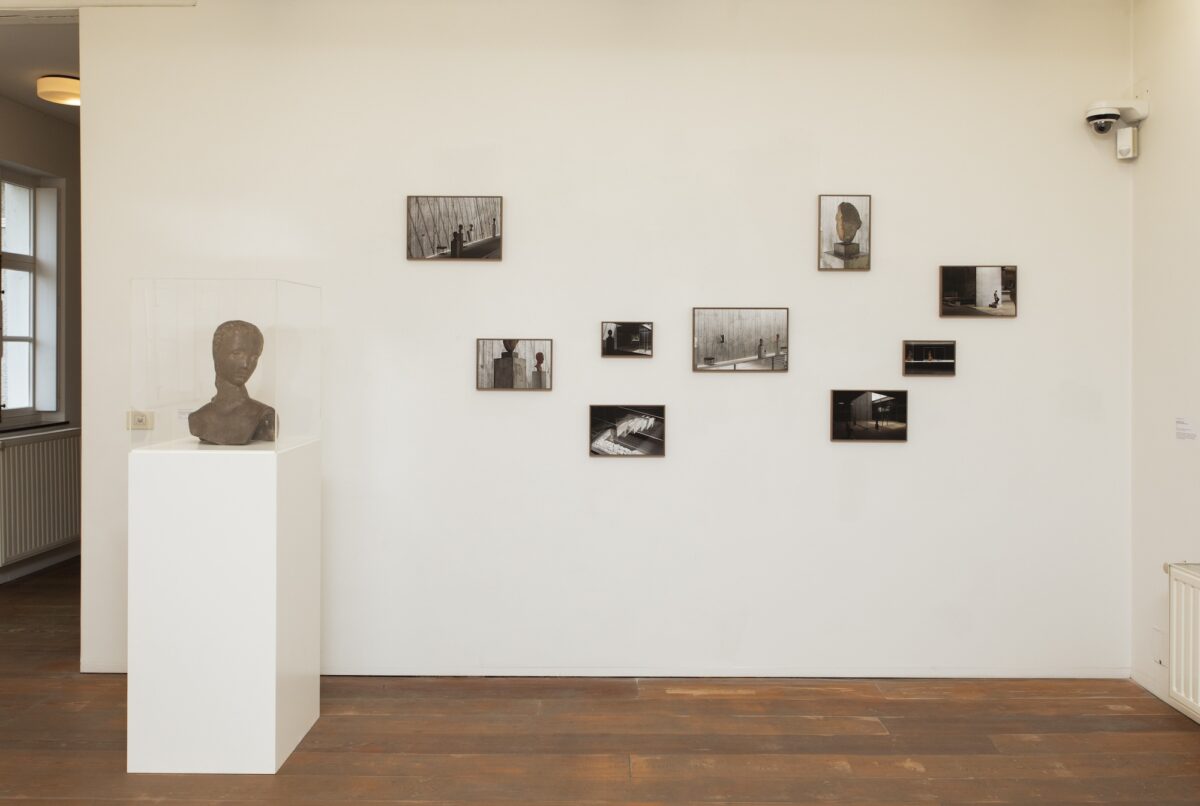
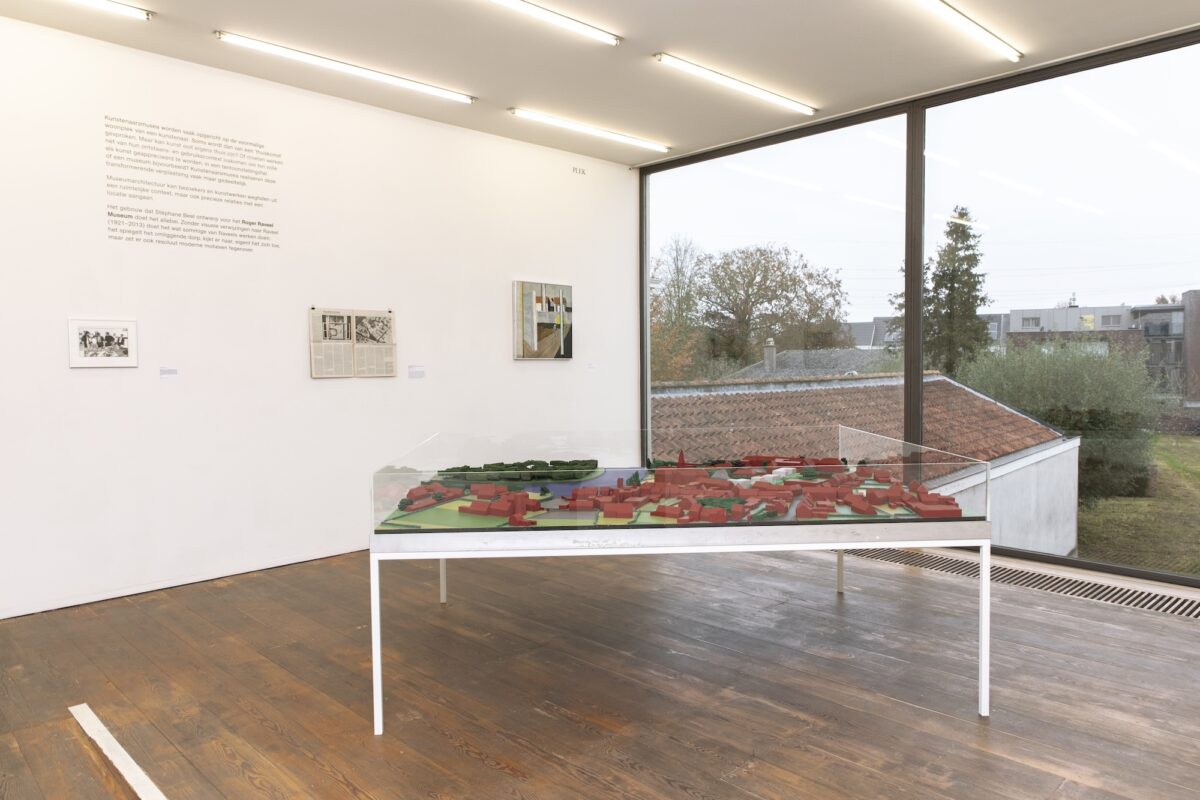
Works of art, architectural drawings and models, historical photographs, publications and other documents are brought together in fascinating theme rooms. Photographer Caroline Vincart worked alongside curator Maarten Liefooghe for several months. She created photo ensembles for MONOS after a series of museum visits, haptic evocations as punctuations in the exhibition.
The French painter Pierre Soulages (1919–2022) made an unexpected remark during the planning stages of a museum dedicated to his work: ‘I’ve never liked single-artist museums. But this one won’t be like the others.’ Why did Soulages find it necessary to distance himself from single-artist museums in general, was this about their old association with glorifying shrines and static arrangements? And how can artist museums differentiate themselves from each other? Soulages museum would prove to be one of a kind after all, thanks to its architecture – a cluster of various volumes clad in weathering steel that cantilever out over a hillside, its interior alternates between white exhibition spaces and halls clad in mottled, blue-grey steel plates. With its pared-back materiality and atmosphere, the museum building resonates in remarkable ways with Soulages’ canvases and graphic prints.
This sort of matching is a striking example of the quest to account for the ‘monographic factor’ in the architecture of single-artist museums: attempts to create an appropriate image or character, or an effective context in which to exhibit and interpret the work of the artist, biographical objects and archives. This aspect of specialising in the spirit of the artist is a typical dynamic that pervades the architectural history of single-artist museums, but there are other typical factors to be observed. Single-artist museums are often established in meaningful places, such as the artist’s home town or live/work studio. Not infrequently, the founding of such museums is rooted in artist initiatives, which is a factor that, just like with certain collector’s museums, qualifies them as genuine musées d’auteur. Other times, their founding is linked to near or distant relatives.
To interpret the differences that exist today between the Van Gogh Museum in Amsterdam, Thorvaldsen’s Museum in Copenhagen and the Paula Modersohn-Becker Museum in Bremen, we have to look further than the ways the project owners and designers of these museums may have sought to incorporate the qualities unique to the work of the artists in question. We should also recognise that Thorvaldsen’s Museum is a typical mid-nineteenth-century monumental museum, whose temple architecture, with its integrated symbolic decorations, is also a carrier of meaning that exists in interplay with the collection presentations, that the Modersohn-Becker Museum was also a German expressionist Gesamtkunstwerk and that the Van Gogh Museum is part of a generation of post-war cultural infrastructure in which modernist architectural language sometimes becomes formulaic, and institutions seeking to contribute to wider cultural participation strive to situate themselves in a society that values leisure and recreation.
In the exhibition and in the book of the same name, the Roger Raveel Museum, on the occasion of its anniversary, is confronted with eleven other nineteenth-, twentieth- and twenty-first-century monographic museums, using thought-provoking works and documents. The goal is not to present a history of single-artist museums and their architecture, nor to in some way offer a complete overview, but rather to establish a thematic map of ‘the monographic museum’, fuelling comparison and reflection on (monographic) museum buildings and institutions.
Curator: Maarten Liefooghe
Photo ensembles: Caroline Vincart
Opening: Sunday 3 November 2024, 11am-5pm