


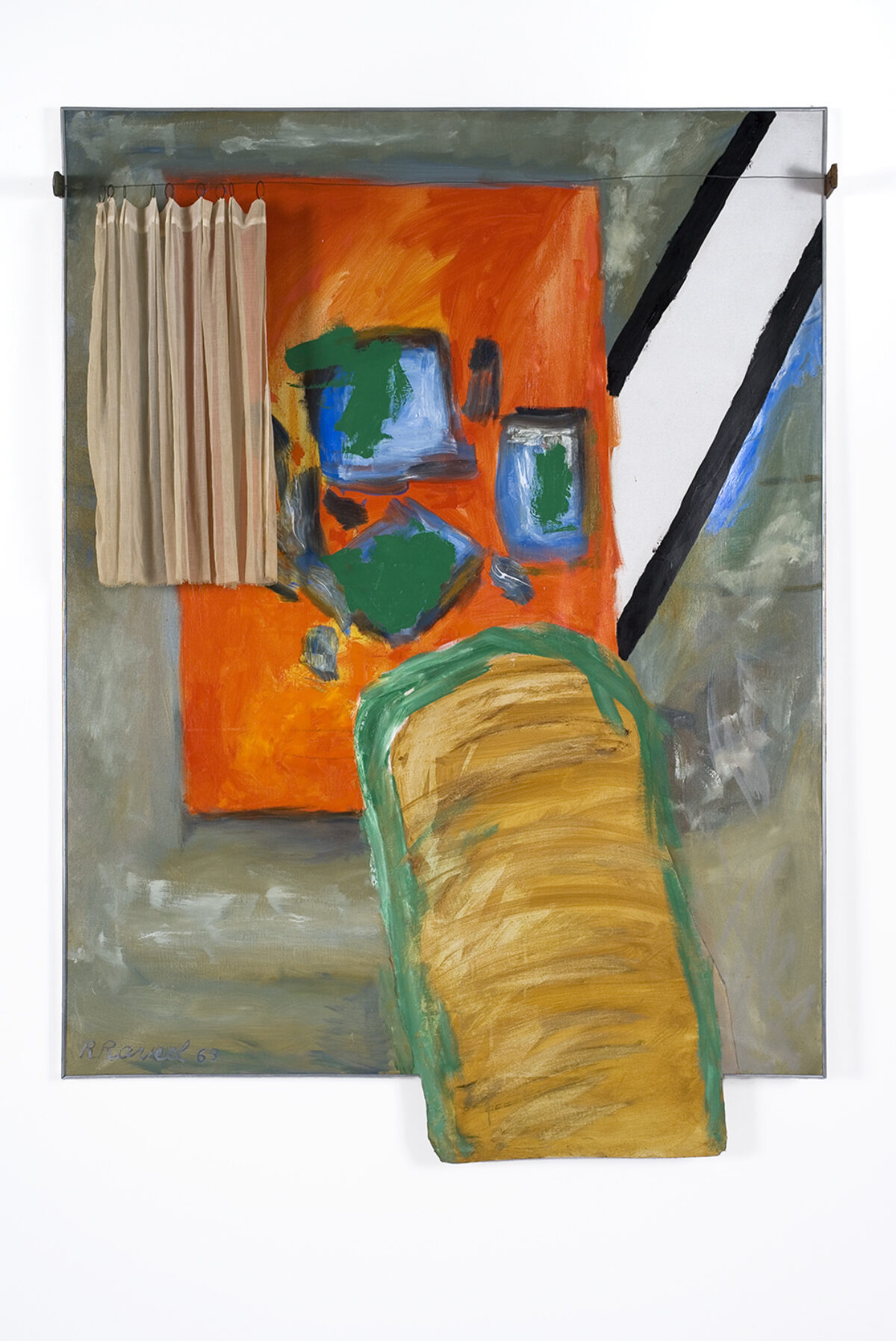
Raveel is fascinated by the fact that the painting does not end at the frame and can continue in its environment or take in its surroundings. From the early 1960s, he regularly attaches found objects to his paintings: wooden slats, a stick, a birdcage, mirrors, a window, a coat rack, etc. He shares this interest with the artists of the French nouveau réalisme but also the American artist Robert Rauschenberg, who develops his combine paintings in the same period. In The little curtain, we discover an abstract-looking painting that creates the image of a character looking out through a window. The figure protrudes from the bottom of the painting, as if it is in 'our' reality and has opened the curtain to 'look outside', like a painting within a painting.